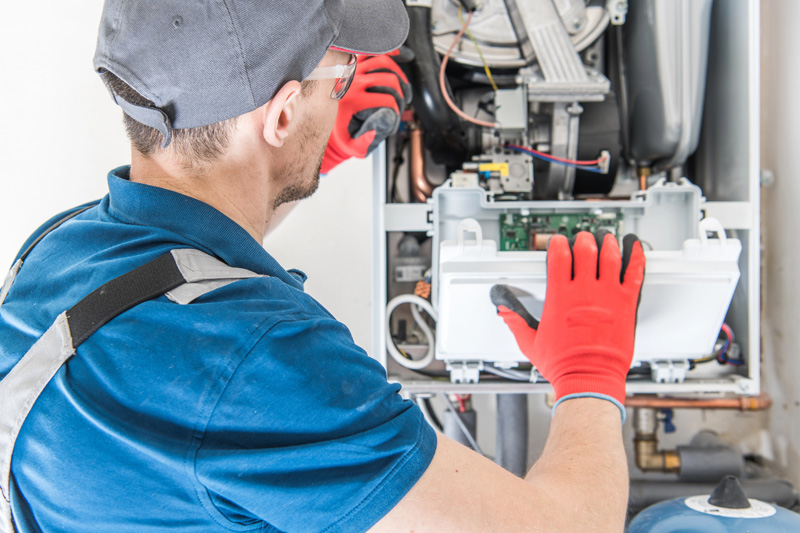
When your furnace stops working on a cold November night, the first instinct is usually panic. But furnace repair doesn’t always require an emergency call if you know a few basic steps to check before picking up the phone. That said, some situations absolutely do call for a professional, and knowing the difference can save you time, money, and a very uncomfortable night.
Start With the Simple Stuff
Before assuming the worst, run through a few quick checks. You’d be surprised how often the fix is closer than you think.
First, look at your thermostat. Make sure it’s set to “heat” and that the temperature is set higher than the current room temperature. If it runs on batteries, swap them out. A dead thermostat display is easy to mistake for a broken furnace.
Next, check your circuit breaker. Furnaces draw a lot of power, and a tripped breaker is a common culprit. If the breaker has flipped, reset it once. If it trips again right away, stop there and call a technician. A repeatedly tripping breaker points to an electrical issue that needs professional attention.
Then take a look at your furnace’s power switch, which looks like a standard light switch and is usually mounted on or near the unit. It gets bumped off accidentally more often than you’d expect. Also check that the front panel cover is fully closed and latched. Many furnaces have a safety switch that prevents operation if the cover is loose or open.
Finally, check your air filter. A filter clogged with dust and debris restricts airflow so severely that the furnace overheats and shuts itself down as a safety measure. If the filter looks gray and packed solid, replace it. This is a simple fix that homeowners in Quogue, Wainscott, and Remsenburg can handle on their own in just a few minutes.
When to Call for Professional Furnace Repair
If you’ve worked through those basics and the heat still isn’t coming on, it’s time to call in a professional. A few situations also warrant skipping the troubleshooting entirely and going straight to the phone.
If you smell gas near your furnace, do not try to investigate or fix anything yourself. Leave the house, leave the door open as you go, and call your gas company from outside. Once the gas company has cleared the property, call an HVAC technician to assess the system before you use it again.
Strange sounds are another signal to stop and call. Banging, rattling, or screeching from inside the unit can point to issues with the blower motor, heat exchanger, or other components that need a trained eye. Ignoring unusual noises tends to turn a moderate repair into a much larger one.
If your furnace is cycling on and off repeatedly without actually warming the house, that short-cycling behavior usually points to a faulty sensor, a venting problem, or an oversized unit, none of which are DIY fixes. The same goes for a furnace that runs but only blows cold air; that often signals a problem with the igniter, flame sensor, or gas valve.
We’ve been handling furnace repair on Long Island’s East End since 1968, and our NATE-certified technicians work on all major brands, including Carrier, Trane, Lennox, Rheem, and many others. Whether you’re on Shelter Island, NY, in Southold, or down in Wainscott, we know the heating systems in homes across this area, from older oil-to-gas conversions to modern high-efficiency units.
Don’t Wait Out the Cold Night If You Don’t Have To
November on the East End can turn genuinely cold, fast. Homes in Remsenburg, Quogue, and out on Shelter Island, NY can see overnight temperatures that make a non-functioning furnace a real hardship, not just an inconvenience. We offer 24/7 emergency service for exactly those moments.
If you have a service agreement with us, you’re already ahead of the curve. Our preventative maintenance plans are designed to catch the small issues before they become the cold-night breakdown. But if you haven’t scheduled a furnace tune-up yet this fall, there’s still time to get it done before the deepest cold sets in.
A Few Temporary Measures While You Wait
If it’s late and you’re waiting on a service call, close off rooms you don’t need to keep warm. Gather in one central space, use extra blankets, and if you have a portable electric space heater, use it safely with the manufacturer’s guidelines in mind. Never use a gas oven or grill indoors as a heat source. These produce carbon monoxide and create a serious risk.
Check your carbon monoxide detectors while you’re at it. A malfunctioning furnace can, in some cases, contribute to CO buildup in a home. Fresh batteries in your detectors are a small thing that matters a great deal.
If we can help you get your heat back on this November, please give us a call or drop us an email. We’re here, we’re local, and we’re ready.